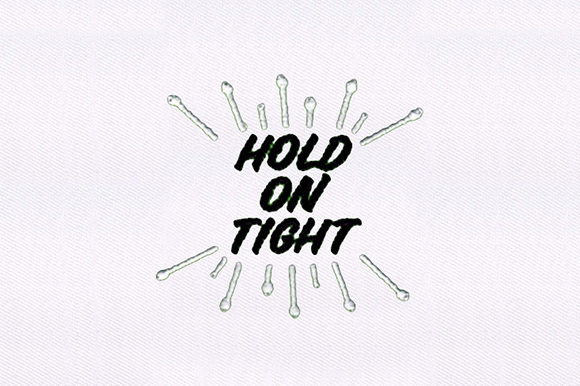
Hold on Tight Text: A Designer’s Craft Fair Review
As an embroidery designer who has spent countless weekends behind a booth table, I know that the difference between a browser and a buyer often comes down to split-second visual impact. When I first loaded Hold on Tight Text into my digitizing software, I wasn’t just looking at lines and nodes; I was imagining how this machine embroidery design would perform under the harsh fluorescent lights of a convention center or the soft natural light of an outdoor market. This review is written for fellow Etsy sellers, boutique makers, and creative entrepreneurs who need to know if this design will translate from a digital file into a profitable handmade product.
First Impressions and Visual Appeal
The phrase "Hold on Tight" carries an inherent emotional weight. It suggests resilience, comfort, and perhaps a touch of whimsical caution. In the context of Awareness products, this text can serve as a gentle reminder or a supportive message, making it versatile for various niches. Visually, the design feels modern yet approachable. It does not scream for attention with excessive ornamentation but rather relies on clean typography and balanced spacing. For a craft fair seller, this is crucial. Customers walking past your booth need to read and understand the message instantly. If they have to squint or tilt their head, you have likely lost the sale.
I found that Hold on Tight Text strikes a balance between bold and delicate. It is not so heavy that it overwhelms the fabric, nor so thin that it gets lost in the weave. This makes it an excellent candidate for items where clarity is key. Whether you are aiming for a rustic farmhouse vibe or a sleek modern aesthetic, the neutrality of the text allows the thread colors and fabric choice to dictate the final mood.
Product Versatility and Market Fit
One of the strongest assets of this design is its adaptability across different craft fair products. During my test runs, I evaluated how Hold on Tight Text performed on several standard items found in handmade shops.
- Tote Bags: This is arguably the best canvas for this design. A large tote bag design allows the text to be the focal point. The flat surface ensures the stitches lay evenly, and the message resonates with shoppers looking for durable, meaningful accessories.
- Aprons and Tea Towels: For kitchen textiles, the design adds a personal touch. Apron embroidery benefits from centered placement, while tea towel embroidery works well near the hem. However, pay close attention to the fabric texture. Terrycloth can swallow small details, so ensure your stitch density is adjusted to pop against the loops.
- Caps and Hats: Curved surfaces are tricky. While Hold on Tight Text can work on caps, you must consider the hoop size and the curvature. If the text is too wide, it may distort. I recommend testing on a structured cap first to see how the letters conform to the dome.
- Embroidered Patches: Creating an embroidered patch with this text is a great way to offer a lower-price-point item. Patches are easy to batch produce and sell as add-ons. Just ensure the backing is secure and the edges are finished cleanly.
For small shop products like pillow covers or fabric pouches, the design serves as a charming accent. It transforms a basic item into a giftable piece. When creating listings for your online store, use a printable mockup to show potential buyers how the design looks on different colored fabrics. This helps bridge the gap between digital expectation and physical reality.
Production Practicalities and Technical Notes
From a production standpoint, efficiency is king. You want a design that is repeatable and reliable. Hold on Tight Text appears to be straightforward, but there are technical considerations every commercial embroidery professional should address before running a full batch.
First, check the stitch density. If the design is too dense, it can cause puckering, especially on lighter fabrics like cotton tea towels. Conversely, if it is too sparse, the fabric background might show through, reducing legibility. Always test on scrap fabric that matches your production material. This step is non-negotiable for maintaining handmade quality.
Second, consider your thread colors. High contrast is essential for readability. Dark thread on dark fabric is a common mistake that kills sales. If you are using navy thread, pair it with cream or white fabric. If you want a subtle look, ensure the sheen of the thread differs enough from the fabric to create dimension.
Third, stabilize correctly. The type of stabilizer you use can make or break the final product. For stretchy fabrics like tote bags made from canvas blends, a cut-away stabilizer might be necessary to prevent distortion over time. For woven aprons, a tear-away might suffice. Always match the stabilizer to the fabric weight and the intended use of the finished product.
File Formats and Compatibility
A major advantage of this digital embroidery file is the extensive range of formats provided. The inclusion of 10O, ART, CND, DSB, DST, DSZ, EXP, HUS, JEF, PCS, PEC, PES, TAP, VIP, VP3, and XXX means that regardless of whether you run a Brother, Janome, Husqvarna, or Bernina machine, you are covered. This universality is vital for designers who switch machines or for small businesses that outsource production. However, always verify the specific hoop size requirements for each format version, as scaling can sometimes alter the stitch path integrity.
Maximizing Sales and Brand Consistency
To truly leverage Hold on Tight Text for your business, think about brand consistency. Does this message align with your shop’s voice? If you sell cozy home goods, this design fits perfectly. If you sell high-energy sports gear, it might feel out of place. Use the design to strengthen your brand narrative.
When setting up your booth display, group items featuring this design together. Create a themed section that highlights the message. This creates a stronger visual impact than scattering single items across the table. Customer engagement increases when they can see a collection, as it suggests a curated experience rather than random inventory.
Finally, always confirm commercial licensing before selling. While many design assets come with broad usage rights, it is your responsibility to ensure you are compliant. This protects your business and ensures you can scale your Etsy seller journey without legal hiccups.
In conclusion, Hold on Tight Text is a solid addition to any embroidery designer’s library. It offers versatility, emotional resonance, and practical ease of production. By paying attention to fabric choice, stabilization, and presentation, you can turn this simple text into a standout handmade product that customers will love to take home.